Current Researchers

Meers Oppenheim
Professor of Astronomy & Associate Director, CSPPh.D. Cornell 1995. Research spans ionospheric turbulence, solar chromosphere, and meteor plasma physics. CEDAR Prize Lecturer 2016. Over 80 refereed publications.
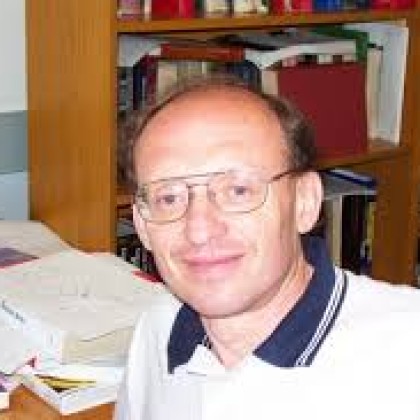
Yakov Dimant
BU Center for Space PhysicsLeading theorist in the group. Fundamental contributions to the theory of E-region instabilities, meteor plasma formation and diffusion, anomalous conductivities, and the thermal Farley–Buneman instability in the solar chromosphere. Co-author on over 40 group publications.
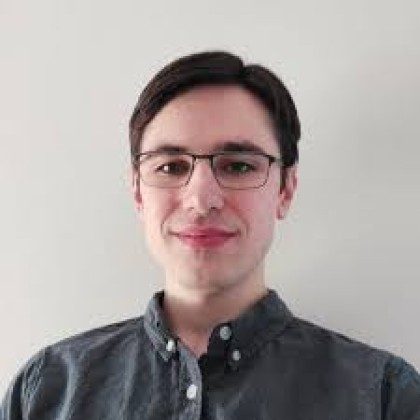
Alexander Green
Astronomy Ph.D., BU (~2026)Dissertation on ionospheric physics and meteor trail echoes. First-authored papers in GRL (2025) and Frontiers (2025). Built massively parallel PIC and EM wave propagation codes within the group. Currently continuing as a postdoc here.
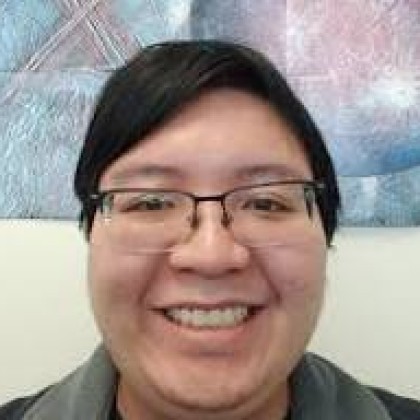
Save Koontaweepunya
Expected graduation ~2028Researching non-Maxwellian ion distributions in the equatorial and auroral electrojets (Koontaweepunya, Dimant & Oppenheim, Frontiers 2024). Working on 3D kinetic simulations of the high-latitude electrojet.
PhD Alumni
Our alumni have gone on to positions across academia, national laboratories, space agencies, and industry. Below is the list of PhD students for whom Prof. Oppenheim served as primary or co-advisor.
| Name | Degree & Year | Dissertation Area | Current or Recent Position |
|---|---|---|---|
 Lars Dyrud Lars Dyrud | Astronomy Ph.D. 2004 BU | Meteor trail plasma physics and radar echoes | Contributed broadly to space physics; founded and leads Eagleview Technologies. Continues to work in industry. |
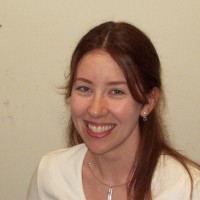 Sigrid Close Sigrid Close | Astronomy Ph.D. 2004 BU | Meteor head echoes and meteoroid properties | Associate Professor, Dept. of Aeronautics and Astronautics, Stanford University |
| Marcos Diaz | ECE Ph.D. 2010 BU (co-advisor) | PIC simulations of ISR spectra and beam–plasma interactions | Professor, ECE, University of Chile |
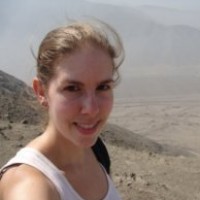 Elizabeth Fucetola Elizabeth Fucetola | Astronomy Ph.D. 2012 BU | Meteor observations and meteoroid mass | Technical Staff, Lincoln National Laboratories |
 Chad Madsen Chad Madsen | Astronomy Ph.D. 2017 BU | Farley–Buneman instability in the solar chromosphere | Astronomer, Harvard–Smithsonian Center for Astrophysics |
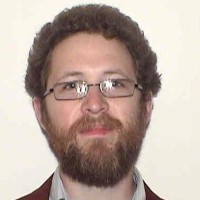 Matthew Young Matthew Young | Astronomy Ph.D. 2019 BU | PIC and hybrid simulations of FB and gradient-drift instabilities | Postdoctoral Researcher, University of New Hampshire (Space Physics) |
 William Longley William Longley | Astronomy Ph.D. 2019 BU | ISR spectrum simulations and 150 km echoes | Research Professor, NJIT Center for Solar-Terrestrial Research |
 Glenn Sugar Glenn Sugar | Aeronautics & Astronautics Ph.D. 2019 Stanford (co-advisor) | Meteor head echo plasma modeling | Senior GNC Engineer, SpaceX (Starlink) |
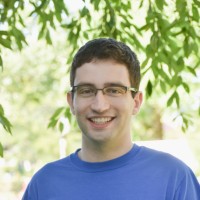 Samuel Evans Samuel Evans | Astronomy Ph.D. 2025 BU | Multi-fluid and kinetic simulations of solar chromospheric turbulence | Research Fellow, BU Center for Space Physics |
 Trevor Douglas-Hodges Trevor Douglas-Hodges | Aeronautics & Astronautics Ph.D. 2025 Stanford (co-advisor) | Meteor physics and ablation modeling (US URSI 1st Prize 2024) | Staff, Lincoln National Laboratories |
Student Awards and Honors
Recognition Earned by Group Members
- US URSI Meeting 1st Prize for Student Research Paper, 2024: Trevor Douglas-Hodges
- AGU BASU Award, 2023: William Longley
- Tenure at Stanford University (Aeronautics & Astronautics), 2016: Sigrid Close
- Faculty position at Stanford University, 2010: Sigrid Close
- Senior Scientist & Head, Ionosphere–Thermosphere Section, Johns Hopkins APL: Lars Dyrud
- NASA Graduate Student Research Program Fellowship, 1999–2003: Lars Dyrud
- Outstanding Student Paper Award, AGU (multiple years): Lars Dyrud
- Best Student Paper Award, CEDAR (multiple years): Lars Dyrud
- Outstanding Student Paper Award, URSI ($1000 prize): Sigrid Close, 2002
- Best Student Paper Award, CEDAR: Licia Ray, 2002
About the Group
Members of the group work on fundamental problems in space weather, atmospheric science, and solar physics, and build the simulation codes at the center of the research. Where former group members have gone is listed in the table above.
Graduate Study in Space Physics
The group takes on new graduate students from time to time through the BU Astronomy PhD program. Details on the program and how to apply are at bu.edu/astronomy/graduate.